Architectural Overview & Engineering Principles
In a zero-carbon power network, flexibility is the currency of stability. Renewable generation and industrial electricity demand rarely align in real time. Without flexible buffer capacity, supply shifts result in price volatility, curtailment waste, and reliance on emergency fossil generation.
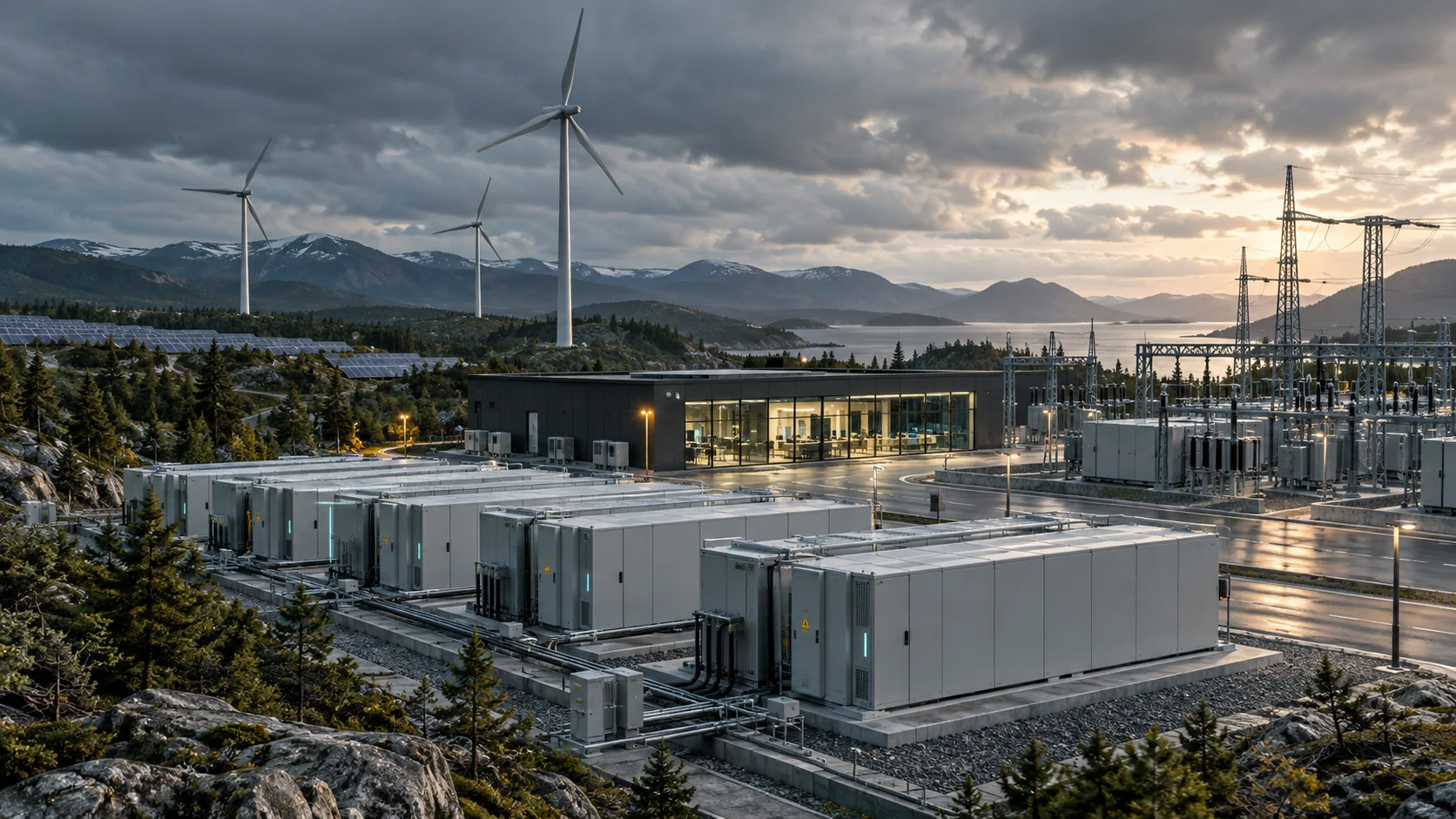
NORDGRID coordinates utility-scale Lithium Iron Phosphate (LFP) and advanced flow battery storage systems designed for dual-role operation: delivering instantaneous frequency containment reserves (FCR) while simultaneously providing multi-hour energy shifting.
Our dispatch algorithms model cell-level thermal degradation, state-of-health (SoH), and localized electricity spot price arbitrage, maximizing system lifetime while providing dependable power to connected industrial consumers.
Core Operational Capabilities
- Sub-second frequency containment (FCR-N / FCR-D)
Autonomously injects or absorbs active power within 200 ms of grid frequency deviations beyond ±0.05 Hz, arresting dangerous frequency excursions.
- Longevity-preserving SoC buffer algorithms
Maintains cell operating profiles within ideal thermodynamic windows (20% – 85% SoC), extending operational lifespan to 15+ years under intense cycling.
- Integrated liquid thermal containment
Active sub-ambient cooling systems designed for harsh sub-arctic and temperate operating climates, ensuring cell delta-T remains within 2°C across all modules.
- Multi-market arbitrage dispatch
Automates participation in day-ahead spot markets, intraday balancing reserves, and black-start capability auctions.
Functions as the dynamic shock absorber of the network, decoupling the precise moment of generation from the moment of consumption.